
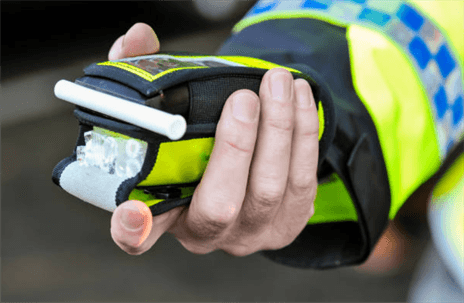
The machine said your breath test was sky-high, and now you are hearing the word “felony” for the first time in your life. You might be replaying the traffic stop, wondering how a night that involved a few drinks turned into a number on a printout that looks nothing like what you felt. That number suddenly controls talk about jail, a permanent record, and losing your license. In Denver and the surrounding counties, that printout often drives everything that happens next. Prosecutors talk about it as if it were a hard scientific fact. DMV notices use it to trigger license consequences. Friends and family may tell you there is no point fighting a breath test. The truth is more complicated. Breathalyzer numbers are not created in a vacuum, and they depend on a technical system that breaks down more often than most people realize.
Our practice has focused on Colorado DUI defense for more than a decade, and that work has put us face to face with the science behind breath and blood testing in Denver and across nearby counties. We routinely obtain and review calibration logs, maintenance records, and operator certifications for the very machines used in local DUI stops. When calibration is rushed, skipped, or mishandled, those high BAC readings that push cases toward felony territory can be far less reliable than they look on paper. Below, we walk through how that happens and what we do about it.
Call (303) 747-4247 today to set up a consultation, or contact us online to learn more.
Why Denver Breathalyzer Numbers Are Not Automatic Truth
After a DUI arrest in Denver, most people are handed a piece of paper with a BAC number on it and treated as if that number ends the conversation. The officer may say something like, “The machine does not lie,” and the paperwork from the jail or station repeats the same figure. It is natural to assume that a device used by law enforcement must be as accurate as a lab test or that there is no meaningful way to question it.
Breathalyzers do not directly measure the alcohol in your blood. They estimate it based on the alcohol in your breath. Inside the device, there is a sensor system and software that take a breath sample, measure a chemical or infrared reaction, and convert that signal into a BAC estimate. For that estimate to be meaningful, the machine has to be regularly calibrated against known standards so that the internal math lines up with reality.
In theory, this is a tight system. In practice, what we see in Denver cases is often different. Machines are used on many drivers in a row. Operators rely on internal self-checks. Calibration is treated as a box to tick in a schedule rather than a critical safeguard. When we dig into the records, we sometimes find gaps and shortcuts that never get mentioned when the officer points at the number on your printout.
At Orr Law Firm, we do not accept the BAC number at face value. Our structured review of every DUI case includes looking at the stop, the field sobriety procedures, and the entire chemical testing process. That means asking whether the machine that generated that "sky-high" number was actually in proper working order when it was used on you.
How Breathalyzer Calibration Is Supposed To Work In Denver
Calibration sounds like a technical word, but the idea is simple. A breathalyzer has to be “taught” what a specific alcohol level looks like. Technicians use a known alcohol standard, either in liquid solution or gas form, that has a defined concentration. They run this standard through the machine and see what reading the device produces. If the reading matches the known value within a tight range, the machine passes. If not, it needs adjustment or service.
There are two related concepts here. Full calibration is when the machine is initially set up or adjusted so that its readings match known values across an expected range. Calibration checks, sometimes called accuracy checks or control tests, are quicker tests done on a regular schedule to confirm that the machine is still reading correctly. In Colorado, law enforcement agencies are expected to follow state guidelines and manufacturer protocols for how often to perform these checks and what counts as an acceptable tolerance.
In a well-run system, there are detailed records for all of this. Each machine in Denver or a neighboring county should have a calibration log that shows dates, times, who performed the test, what standard was used, and what number the machine generated. Maintenance records should show when parts were replaced, when the device was taken out of service, and when it was returned. Operators must have training and, in many cases, documented certification to use the device correctly on drivers.
When we review a DUI case at Orr Law Firm, we request these records as part of our discovery process. We do not just look for a single line that says “machine OK.” We look at the pattern of checks leading up to your test date and the procedures the specific agency used. If the logs are thin, missing, or out of date, or if the machine seems to have been kept in service despite repeated issues, those are red flags that the clean number on your printout is resting on a shaky foundation.
Where Breathalyzer Calibration Fails In Real Colorado Cases
On paper, calibration looks straightforward. In busy police departments and sheriff’s offices, especially in high-traffic areas like the Denver metro, the reality is more complicated. Machines are in near constant use. Staff change shifts. Budgets and schedules are tight. Under those conditions, the careful calibration steps that protect the integrity of your BAC reading can slip.
One failure mode we see is neglect of the schedule. A breathalyzer might have a recommended interval for full calibration and more frequent accuracy checks. If the calendar is not tracked carefully, checks may be done late or skipped altogether. We sometimes see a log that shows a long gap with no entries, even though the machine was clearly used during that time. In that situation, the sensor inside the device may have drifted, but no one caught it.
Another problem involves how checks are actually done. Some agencies rely heavily on the machine’s internal self-test, which may confirm that sensors and electronics are functioning but does not replace a proper check with an external standard. If a control test with a known solution is rushed, repeated without documenting a first failure, or run in the wrong conditions, the machine can appear to pass on paper while still reading high in real use.
Operator procedures can also undermine calibration. If the person running the test does not wait the required observation period, does not instruct you correctly, or does not handle the device the way the manufacturer specifies, the result can be skewed. That is before we even get to issues like residual mouth alcohol, temperature, and medical conditions, which also tie back to whether the operator followed protocol.
These are not rare flukes. In Denver and surrounding Colorado counties, we have seen patterns where entire blocks of time are supported only by thin or questionable records. When that happens, it is not just one driver who may be affected. Everyone tested on that machine during that period may have a BAC number that looks precise but rests on a system that did not live up to its own rules.
How A Small Calibration Error Can Push A DUI Into Felony Territory
The difference between a misdemeanor DUI and a felony DUI in Colorado often turns on two things, your prior history and how prosecutors view the seriousness of the current case. BAC is a big part of that seriousness. A result just over the 0.08 legal limit looks very different than a result that appears to be double the limit, especially when someone already has past DUI convictions on their record.
Imagine a situation where your true BAC is around 0.13. If the breathalyzer you blow into is reading slightly high because calibration has drifted and no one has caught it, that same sample might be reported as 0.16 or higher. On paper, that three hundredths of a point difference can make a big impact. It can change how a prosecutor views you, how a judge thinks about bond and conditions, and how aggressively the case is charged or negotiated.
In cases where someone already has multiple prior DUIs, Colorado law allows prosecutors to pursue a felony DUI. A very high current BAC reading can make that path more likely. Even when the legal basis for a felony filing is tied to prior convictions, the current BAC number often colors everything, from plea offers to sentencing arguments. A machine that regularly reads a bit high because of poor calibration magnifies that risk.
We prepare every DUI case with trial in mind, including cases where felony exposure is on the table. That trial mindset pushes us to examine not just what the BAC number is, but how the system produced it. When we can show that a machine’s calibration history is questionable or that procedures were not followed, we can argue that a supposedly “extreme” BAC is not as solid as it looks. That does not erase someone’s record, but it can change how prosecutors, judges, and even DMV hearing officers view the evidence in front of them.
What We Look For In Denver Breathalyzer Records
Challenging a breath test is not about guessing or making broad claims that “machines are unreliable.” It is about reading the paper trail that should exist for every device and every operator. In Denver and nearby counties, that paper trail typically includes calibration logs, maintenance reports, control test results, operator training records, and sometimes internal communications about specific devices.
When we receive calibration logs, we compare the dates of your test with the dates and results of prior checks. We look for how often full calibrations were done, how frequently control tests were run, and whether any out-of-range readings were recorded. If we see a pattern of a machine barely passing or needing repeated adjustments, that raises questions about its stability. The absence of entries can be just as telling as the entries that exist.
Maintenance records tell another part of the story. A device that has been in for repair repeatedly, or that has had key components replaced without a clear recalibration record afterward, may not be one you want to trust at face value. If the machine was taken out of service around the time of your test, we want to know why. Sometimes the timing of repairs and recalibrations paints a different picture than the tidy number on your printout suggests.
Operator certifications and training records matter as well. We look at who ran the test, what training they have, and whether their approach matches manufacturer instructions and Colorado standards. Body camera footage, when available, can show how closely the actual testing matched the written procedures. All of this feeds into motions, cross-examination, DMV hearings, and negotiations.
Our firm uses a structured internal process to track discovery requests, deadlines, and hearing dates so we can obtain and analyze these records before critical decisions are made in your case. That organization matters, because Colorado DUI and DMV timelines move quickly, and calibration issues are only useful if they are identified and developed in time to present them effectively.
Why Drivers Are Blamed While System Failures Are Ignored
When a breath test shows a very high BAC, the immediate focus in court often lands on the driver. Prosecutors may talk about risk to the public and personal choices. Bond arguments, plea discussions, and even media narratives tend to frame high numbers as proof of individual misconduct. The calibration and maintenance system behind those numbers rarely gets mentioned unless someone forces the issue.
There are reasons for that. Law enforcement agencies and the companies that make and service breathalyzers have an interest in presenting these machines as reliable, consistent tools. Admitting that calibration schedules were stretched, logs were incomplete, or staff did not follow every step of the protocol would mean acknowledging that some of the data used to prosecute people is less solid than it appears.
At the same time, agencies are under pressure. Budgets are limited, staffing is tight, and call volumes in places like Denver, Aurora, and nearby communities keep rising. When a machine appears to be working, there is a strong temptation to keep using it and to treat self-checks as good enough, even if full calibration is overdue. Those policy choices create systemic risks that fall on the shoulders of individual drivers when cases are filed and argued.
Questioning a breathalyzer’s calibration is not about denying responsibility if someone truly drove impaired. It is about holding the system to its own standards, especially when that system is being used to justify a felony charge with lifelong consequences. Our role is to bring those hidden layers into the open so that your case is decided on trustworthy evidence, not blind faith in a machine.
What To Do If You Suspect A Bad Breath Test In Denver
If your gut tells you that the breath test result does not match how you felt or what you drank, you are not alone. The worst thing you can do is assume that nothing can be done and wait to see what happens. Colorado DUI cases move quickly, and in many situations you have a limited number of days from your arrest or notice to request a DMV hearing that can protect your driving privileges.
A good first step is to gather and preserve everything connected to your arrest. That includes the printout showing your BAC, any paperwork with the machine’s serial number or testing information, your summons, and any DMV notices you receive. As soon as you can, write down your memory of the stop and the test, including how long the officer watched you before the test, whether you ate, drank, or vomited recently, and anything unusual about the device or instructions.
Next, reach out to a DUI defense firm that works with breath testing and DMV hearings regularly in Denver and surrounding counties. The sooner a lawyer is involved, the sooner they can request calibration and maintenance records, body camera footage, and other evidence that may not be preserved indefinitely. Early action can also protect your right to challenge the breath test in both the criminal case and the DMV process.
At Orr Law Firm, we guide clients through both tracks at the same time. We help them understand bond conditions, ignition interlock requirements, and DMV deadlines that are often tied to breath test numbers. Clients have told us they feel less overwhelmed when someone is explaining each step in plain language and responding to their questions as court and DMV dates approach.
How Orr Law Firm Approaches Felony-Level DUI Cases Involving Breath Tests
When someone comes to us facing potential felony DUI charges tied to a high breath test, we do not treat it as just another case. We start by gathering every available piece of information, from the traffic stop details and field sobriety tests to the complete breath testing and calibration history. Our review is tailored to the specific facts, not built on a preset formula, because no two DUI arrests in Denver or the surrounding counties are exactly the same.
We prepare cases with trial in mind, even when it is possible that a resolution will come through negotiation. That preparation means we are ready to challenge breath test evidence in court through motions and cross-examination if needed. It also means that when we sit down with a prosecutor to discuss a case, we are not just asking for leniency. We are showing them calibration gaps, maintenance concerns, or procedural problems that weaken the reliability of the BAC number they are relying on.
Our work does not stop at the courthouse door. We walk clients through bond conditions, ignition interlock installation, and probation terms that can follow a DUI conviction or plea, always keeping in mind how a felony conviction affects employment, professional licensing, and family stability. Payment plans are available, which helps clients move quickly to secure representation at a moment when financial planning has been the last thing on their mind.
If you are looking at a breath test result that has pushed your DUI case into felony territory, you do not have to face it alone or accept the number on the page as the whole truth. We are based in Denver and regularly appear in courts across Adams, Arapahoe, Boulder, Jefferson, Douglas, and Broomfield Counties, bringing a responsive and thorough approach to each case.