Colorado DUI Statutes & Laws
Know Colorado’s Laws & Statutes Related to DUI
After being arrested for driving under the influence (DUI) in Colorado, it’s important that you familiarize yourself with the statutes pertaining to your case and your rights under the law. At The Orr Law Firm in Denver, our DUI defense attorneys have the knowledge, experience and training to keep you informed every step of the way, answering your questions and explaining exactly how the law applies to your case.
Our Denver DUI lawyers are known for their extensive level of training, high level of competence and dedication to our field—in fact, we focus our practice on DUI defense and rarely take cases in any other legal area.
Being Informed is the Key to Your Case
DUI law in Colorado is complex, so you should begin understanding relevant state statutes and your legal rights as soon as possible after an arrest. This information will be critical as you move through the criminal justice system in the days, weeks and months to come. Law enforcement officers and prosecutors can be relentless in their targeting of individuals they suspect of DUI or driving while ability impaired (DWAI), so regardless of your level of comprehension, you need professional legal support to ensure the best possible outcome to your case.
Types of DUI Charges
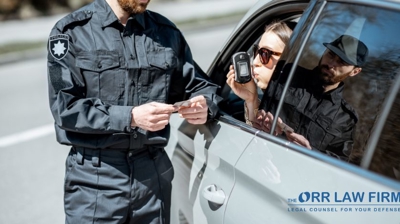
State law includes the policy of express consent, which means that you expressly consent to take a breath or blood test if a police officer suspects you have been operating a vehicle while impaired by alcohol. If the officer believes all or part of your impairment is due to drugs, you have expressly consented to submitting to a test of your blood.
The following pages provide further information on different types of drunk driving-related or drugged driving-related charges and issues you might face in Colorado:
- DUI: This is the most serious type of misdemeanor traffic offense and involves a motorist with a blood alcohol content (BAC) above .08 percent operating a vehicle. DUI convictions come with serious penalties, even for first time offenders who have never been arrested in the past.
- DWAI: These charges result when officers believe that a driver is operating a vehicle at a lessened mental or physical capacity due to drug or alcohol use. Motorists do not have to register a BAC above .08 percent to be arrested for DWAI. If the officer has probable cause to believe you are impaired to the slightest degree, you can be charged with DWAI.
- DUID: Driving under the influence of drugs (DUID) is illegal in Colorado and has been a key focus of law enforcement agencies since the legalization of recreational marijuana in our state. DUID charges may also involve legal drugs, such as prescription medications, that cause drowsiness or other impairments.
- UDD: As alcohol consumption is illegal for people under the age of 21, the state operates on a zero tolerance policy when it comes to underage drivers with alcohol in their system. Police can arrest a minor for UDD if his or her BAC is as low as .02 percent. If an officer has probable cause to believe a minor has consumed alcohol, they will likely arrest them and require them to submit to a chemical test of their blood or breath.
- DUI penalties: Some of the possible DUI penalties include up to a year incarceration, large fines, a suspended driver’s license, alcohol education and therapy, community service, a MADD Victim Impact Panel, monitored sobriety, probation and the mandatory installation of an ignition interlock device (IID) in your vehicle.
42-4-1301. Driving Under the Influence
Statute 42-4-1301(1):
- (a) It is a misdemeanor for any person who is under the influence of alcohol or one or more drugs, or a combination of both alcohol and one or more drugs, to drive a motor vehicle or vehicle.
- (b) It is a misdemeanor for any person who is impaired by alcohol or by one or more drugs, or by a combination of alcohol and one or more drugs, to drive a motor vehicle or vehicle.
- (d) As used in this section, one or more drugs means any drug, as defined in section 27-80-203 (13), C.R.S., any controlled substance, as defined in section 18-18-102 (5), C.R.S., and any inhaled glue, aerosol, or other toxic vapor or vapors, as defined in section 18-18-412, C.R.S.
- (e) The fact that any person charged with a violation of this subsection (1) is or has been entitled to use one or more drugs under the laws of this state, including, but not limited to, the medical use of marijuana pursuant to section 18-18-406.3, C.R.S., shall not constitute a defense against any charge of violating this subsection (1).
- (f) "Driving under the influence" means driving a motor vehicle or vehicle when a person has consumed alcohol or one or more drugs, or a combination of alcohol and one or more drugs, that affects the person to a degree that the person is substantially incapable, either mentally or physically, or both mentally and physically, to exercise clear judgment, sufficient physical control, or due care in the safe operation of a vehicle.
- (g) "Driving while ability impaired" means driving a motor vehicle or vehicle when a person has consumed alcohol or one or more drugs, or a combination of both alcohol and one or more drugs, that affects the person to the slightest degree so that the person is less able than the person ordinarily would have been, either mentally or physically, or both mentally and physically, to exercise clear judgment, sufficient physical control, or due care in the safe operation of a vehicle.
- (h) Pursuant to section 16-2-106, C.R.S., in charging the offense of DUI, it shall be sufficient to describe the offense charged as "drove a vehicle under the influence of alcohol or drugs or both".
- (i) Pursuant to section 16-2-106, C.R.S., in charging the offense of DWAI, it shall be sufficient to describe the offense charged as "drove a vehicle while impaired by alcohol or drugs or both".
Understanding BAC in DUI Cases
Statute 42-4-1301(2):
- (2) (a) It is a misdemeanor for any person to drive a motor vehicle or vehicle when the person's BAC is 0.08 or more at the time of driving or within two hours after driving. During a trial, if the state's evidence raises the issue, or if a defendant presents some credible evidence, that the defendant consumed alcohol between the time that the defendant stopped driving and the time that testing occurred, such issue shall be an affirmative defense, and the prosecution must establish beyond a reasonable doubt that the minimum 0.08 blood or breath alcohol content required in this paragraph (a) was reached as a result of alcohol consumed by the defendant before the defendant stopped driving.
- (a.5) (I) It is a class A traffic infraction for any person under twenty-one years of age to drive a motor vehicle or vehicle when the person's BAC, as shown by analysis of the person's breath, is at least 0.02 but not more than 0.05 at the time of driving or within two hours after driving. The court, upon sentencing a defendant pursuant to this subparagraph (I), may, in addition to any penalty imposed under a class A traffic infraction, order that the defendant perform up to twenty-four hours of useful public service, subject to the conditions and restrictions of section 18-1.3-507, C.R.S., and may further order that the defendant submit to and complete an alcohol evaluation or assessment, an alcohol education program, or an alcohol treatment program at such defendant's own expense. (II) A second or subsequent violation of this paragraph (a.5) shall be a class 2 traffic misdemeanor.
- (b) In any prosecution for the offense of DUI per se, the defendant shall be entitled to offer direct and circumstantial evidence to show that there is a disparity between what any tests show and other facts so that the trier of fact could infer that the tests were in some way defective or inaccurate. Such evidence may include testimony of non-expert witnesses relating to the absence of any or all of the common symptoms or signs of intoxication for the purpose of impeachment of the accuracy of the analysis of the person's blood or breath.
- (c) Pursuant to section 16-2-106, C.R.S., in charging the offense of DUI per se, it shall be sufficient to describe the offense charged as "drove a vehicle with excessive alcohol content".
Breaking Down Other Statute Sections
(3) The offenses described in subsections (1) and (2) of this section are strict liability offenses.
(4) No court shall accept a plea of guilty to a non-alcohol-related or non-drug-related traffic offense or guilty to the offense of UDD from a person charged with DUI or DUI per se; except that the court may accept a plea of guilty to a non-alcohol-related or non-drug-related traffic offense or to UDD upon a good faith representation by the prosecuting attorney that the attorney could not establish a prima facie case if the defendant were brought to trial on the original alcohol-related or drug-related offense.
(5) Notwithstanding the provisions of section 18-1-408, C.R.S., during a trial of any person accused of both DUI and DUI per se, the court shall not require the prosecution to elect between the two violations. The court or a jury may consider and convict the person of either DUI or DWAI, or DUI per se, or both DUI and DUI per se, or both DWAI and DUI per se. If the person is convicted of more than one violation, the sentences imposed shall run concurrently.
Statute 42-4-1301(6)
- (a) In any prosecution for DUI or DWAI, the defendant's BAC or drug content at the time of the commission of the alleged offense or within a reasonable time thereafter gives rise to the following presumptions or inferences:
- (I) If at such time the defendant's BAC was 0.05 or less, it shall be presumed that the defendant was not under the influence of alcohol and that the defendant's ability to operate a motor vehicle or vehicle was not impaired by the consumption of alcohol.
- (II) If at such time the defendant's BAC was in excess of 0.05 but less than 0.08, such fact gives rise to the permissible inference that the defendant's ability to operate a motor vehicle or vehicle was impaired by the consumption of alcohol, and such fact may also be considered with other competent evidence in determining whether or not the defendant was under the influence of alcohol.
- (III) If at such time the defendant's BAC was 0.08 or more, such fact gives rise to the permissible inference that the defendant was under the influence of alcohol.
- (IV) If at such time the driver's blood contained five nanograms or more of delta 9-tetrahydrocannabinol per milliliter in whole blood, as shown by analysis of the defendant's blood, such fact gives rise to a permissible inference that the defendant was under the influence of one or more drugs.
(b) The limitations of this subsection (6) shall not be construed as limiting the introduction, reception, or consideration of any other competent evidence bearing upon the question of whether or not the defendant was under the influence of alcohol or whether or not the defendant's ability to operate a motor vehicle or vehicle was impaired by the consumption of alcohol.
(c) In all actions, suits, and judicial proceedings in any court of this state concerning alcohol-related or drug-related traffic offenses, the court shall take judicial notice of methods of testing a person's alcohol or drug level and of the design and operation of devices, as certified by the department of public health and environment, for testing a person's blood, breath, saliva, or urine to determine such person's alcohol or drug level. The department of public health and environment may, by rule, determine that, because of the reliability of the results from certain devices, the collection or preservation of a second sample of a person's blood, saliva, or urine or the collection and preservation of a delayed breath alcohol specimen is not required. This paragraph (c) shall not prevent the necessity of establishing during a trial that the testing devices used were working properly and that such testing devices were properly operated. Nothing in this paragraph (c) shall preclude a defendant from offering evidence concerning the accuracy of testing devices.
(d) If a person refuses to take or to complete, or to cooperate with the completing of, any test or tests as provided in section 42-4-1301.1 and such person subsequently stands trial for DUI or DWAI, the refusal to take or to complete, or to cooperate with the completing of, any test or tests shall be admissible into evidence at the trial, and a person may not claim the privilege against self-incrimination with regard to admission of refusal to take or to complete, or to cooperate with the completing of, any test or tests.
(e) Involuntary blood test - admissibility. Evidence acquired through an involuntary blood test pursuant to section 42-4-1301.1 (3) shall be admissible in any prosecution for DUI, DUI per se, DWAI, or UDD, and in any prosecution for criminally negligent homicide pursuant to section 18-3-105, C.R.S., vehicular homicide pursuant to section 18-3-106 (1) (b), C.R.S., assault in the third degree pursuant to section 18-3-204, C.R.S., or vehicular assault pursuant to section 18-3-205 (1) (b), C.R.S.
(f) Chemical test - admissibility. Strict compliance with the rules and regulations prescribed by the department of public health and environment shall not be a prerequisite to the admissibility of test results at trial unless the court finds that the extent of noncompliance with a board of health rule has so impaired the validity and reliability of the testing method and the test results as to render the evidence inadmissible. In all other circumstances, failure to strictly comply with such rules and regulations shall only be considered in the weight to be given to the test results and not to the admissibility of such test results.
(g) It shall not be a prerequisite to the admissibility of test results at trial that the prosecution present testimony concerning the composition of any kit used to obtain blood, urine, saliva, or breath specimens. A sufficient evidentiary foundation concerning the compliance of such kits with the rules and regulations of the department of public health and environment shall be established by the introduction of a copy of the manufacturer's or supplier's certificate of compliance with such rules and regulations if such certificate specifies the contents, sterility, chemical makeup, and amounts of chemicals contained in such kit.
(h) In any trial for a violation of this section, the testimony of a law enforcement officer that he or she witnessed the taking of a blood specimen by a person who the law enforcement officer reasonably believed was authorized to withdraw blood specimens shall be sufficient evidence that such person was so authorized, and testimony from the person who obtained the blood specimens concerning such person's authorization to obtain blood specimens shall not be a prerequisite to the admissibility of test results concerning the blood specimens obtained.
(i) (I) Following the lawful contact with a person who has been driving a motor vehicle or vehicle and when a law enforcement officer reasonably suspects that a person was driving a motor vehicle or vehicle while under the influence of or while impaired by alcohol, the law enforcement officer may conduct a preliminary screening test using a device approved by the executive director of the department of public health and environment after first advising the driver that the driver may either refuse or agree to provide a sample of the driver's breath for such preliminary test; except that, if the driver is under twenty-one years of age, the law enforcement officer may, after providing such advisement to the person, conduct such preliminary screening test if the officer reasonably suspects that the person has consumed any alcohol.
(II) The results of this preliminary screening test may be used by a law enforcement officer in determining whether probable cause exists to believe such person was driving a motor vehicle or vehicle in violation of this section and whether to administer a test pursuant to section 42-4-1301.1 (2).
(III) Neither the results of such preliminary screening test nor the fact that the person refused such test shall be used in any court action except in a hearing outside of the presence of a jury, when such hearing is held to determine if a law enforcement officer had probable cause to believe that the driver committed a violation of this section. The results of such preliminary screening test shall be made available to the driver or the driver's attorney on request.
(j) In any trial for a violation of this section, if, at the time of the alleged offense, the person possessed a valid medical marijuana registry identification card, as defined in section 25-1.5-106 (2) (e), C.R.S., issued to himself or herself, the prosecution shall not use such fact as part of the prosecution's case in chief.
(k) In any traffic stop, the driver's possession of a valid medical marijuana registry identification card, as defined in section 25-1.5-106 (2) (e), C.R.S., issued to himself or herself shall not, in the absence of other contributing factors, constitute probable cause for a peace officer to require the driver to submit to an analysis of his or her blood.
(8) A second or subsequent violation of this section committed by a person under eighteen years of age may be filed in juvenile court.
Learn more by working with a Denver DUI defense lawyer
If you have further questions or face charges related to DUI or DWAI in Denver or elsewhere in Colorado, consult the defense attorneys at The Orr Law Firm. You can reach our team by calling (303) 747-4247 or by contacting us online.
We offer free initial evaluations and are known for our passion for defending our clients’ rights!

What Sets Us Apart From The Rest?
Orr Law Firm is here to help you get the results you need with a team you can trust.
-
Offer Free Consultations and Payment Plans
-
Proven Record of Dismissals, Reductions, and Acquittals
-
Highly-Qualified Defenders Who Know How to Fight for Results
-
Award-Winning Advocacy from Top Trial Lawyers in the Nation